


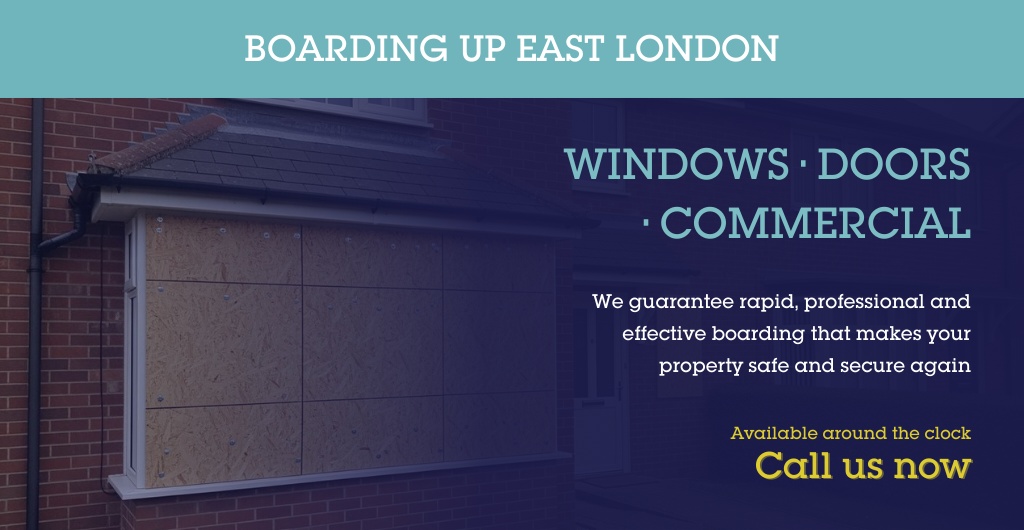
Residential Boarding Up in East London (E Postcodes)
When something goes wrong at home—a smashed window, a forced door, storm damage, or a fire—you’re suddenly dealing with two problems at once: keeping everyone safe, and securing the property quickly so things don’t get worse overnight.
Boarding Up East London provides residential boarding up across the E postcode area (E1–E77). We’ve been trading for 10+ years, we’re fully insured, and our technicians are DBS-checked. We prioritise urgent call-outs and will give you a realistic ETA on the phone based on where you are and what’s happening.
If you need immediate help, start here: emergency boarding up
Or call now: Call 020 4634 6384
When do homeowners and landlords need boarding up?
Residential boarding is most often needed when an opening to the property can’t be properly secured straight away—either because the glazing/door is damaged, the frame has failed, or the structure needs further assessment before permanent repairs can begin.
In East London, we commonly attend homes across flats, maisonettes, Victorian terraces, newer estates, and converted properties where access, communal areas, and security expectations vary from one street to the next.
Typical reasons people call us include:
- To board up a broken window after an impact, break-in, or vandalism
- A smashed window that makes the home unsafe, cold, or exposed to rain
- To board up a door after forced entry, a failed lock, or damaged frame
- Temporary boarding while you wait for a glazier, locksmith, or insurer approval
- To make safe after fire service attendance, storm damage, or building works
- Out of hours securing when trades can’t attend until the next day
If you’re unsure whether boarding up is necessary, tell us what’s happened and (if safe) send a photo. We’ll advise whether boarding is the right option, or whether another type of make-safe is more suitable.
Common residential scenarios we handle (and what usually happens next)
Break-ins and forced entry
A burglary is stressful and disruptive. The priority is to secure property so you can sleep, leave for work, or wait for follow-on repairs without worrying about another entry attempt.
A typical forced-entry call-out may involve:
- Splintered timber door edges or a cracked uPVC panel
- A broken lock area where the door won’t latch
- Side/rear windows damaged for access
Depending on the damage, we’ll either install secure boarding or discuss a temporary steel door option if the doorway can’t be safely boarded in a way that still protects the frame.
If this is your situation, the burglary guidance page may help: burglary repairs and boarding
Vandalism and thrown objects
Residential vandalism often presents as a smashed ground-floor window, damaged glazing in a communal entrance, or a broken pane in a door. Even if the opening looks “small”, it can be enough for water ingress, heat loss, or opportunistic entry.
We’ll assess whether the opening needs full boarding, partial boarding, or a more targeted approach that prevents sharp edges and further cracking.
Related advice: vandalism repair and boarding
Storm damage and fallen debris
High winds can take out panes, dislodge older frames, or cause roof/loft openings that let rain in quickly—especially overnight when you can’t get a roofer immediately.
We’re often asked to make safe and weatherproof as much as possible until permanent repairs are arranged.
Related advice: storm damage boarding
Fire damage (securing only)
After a fire, even a small one, windows and doors can be compromised by heat, smoke, or fire service entry. Our role is to secure the property—not to carry out smoke/odour remediation.
If the structure is unsafe or access is restricted, we’ll work within any instructions given at the scene.
Related advice: fire damage securing
Flooding and water damage
Floodwater can swell timber doors, warp frames, and cause locks to fail. Sometimes you need boarding because the opening won’t close properly, or because glazed units have cracked due to movement.
We’ll secure what we can, while also considering ventilation and drying requirements (where appropriate and safe).
Related advice: flood damage boarding
Accidental impact (DIY, pets, kids, vehicles)
Accidents happen—patio doors crack, a football goes through a window, or a vehicle clips a garden wall and damages a front window.
If the opening is exposed, boarding up prevents injuries, deters entry, and reduces further damage while you organise replacement glazing or joinery.
Related advice: accident damage make-safe
How we board up residential windows (materials and fixing methods)
Residential window boarding is about more than just covering a hole. It needs to be secure from the outside, stable, and fitted in a way that doesn’t cause unnecessary extra damage.
We typically use:
- 18mm exterior-grade plywood for stronger security and larger openings
- 12mm OSB for smaller or lower-risk openings where appropriate
The right choice depends on the size of the opening, location (front/rear, accessible or not), and whether the property will be empty.
Fixing methods we may use
The best fixing approach depends on the frame material and the condition of the surrounding structure:
- Reveal fixings (into masonry reveals) where the frame is fragile or already damaged
- Frame fixings where suitable and safe to do so
- Anti-tamper fixings where the property may be unattended—important because it reduces the chance of boards being removed from outside
If the frame or surrounding masonry is too unstable for non-destructive methods, we’ll explain the options before proceeding. Sometimes the safest approach is to secure further back into sound material, even if that changes the look of the final board.
For more detail, see: window boarding in East London
How we secure damaged residential doors (including temporary steel doors)
A broken door can’t always be “boarded” in a way that restores genuine security—especially if the lock side and jamb have failed. In those cases, the aim is to prevent entry until the door set can be repaired or replaced.
We may:
- Board the door opening securely if the structure allows
- Reinforce the immediate area to reduce leverage points
- Recommend a temporary steel door for medium-term protection (common for empty homes, probate properties, or where parts are on order)
A steel door is often the most practical option where the doorway has been forced and the property needs to remain secure for days or weeks, not just overnight.
More detail here: door boarding in East London
Flats, conversions, and communal entrances: practical considerations
Residential work in East London often involves flats, maisonettes, and conversions, and that brings a few real-world challenges:
- Communal hallways and access: we may need you, a neighbour, concierge, or managing agent to grant entry
- Noise and out-of-hours working: we keep disruption down, but some fixing work is unavoidably loud
- Upper floors: we’ll discuss safe access and the best way to secure the opening without creating risk to people below
- Fire doors and escape routes: we won’t block a required exit route—if a door is part of a protected corridor, we’ll talk through the safest option
If you’re a landlord, property manager, or letting agent and need documentation for compliance or incident reporting, we can provide clear descriptions of what was done and why.
What you get after we attend
People often need paperwork quickly—especially after a break-in or for an insurance claim. Where requested, we can provide:
- Itemised invoices and a statement of works
- Time-stamped photos of the damage and the completed boarding
- Notes you can pass to your insurer, managing agent, or contractor
We’re not loss adjusters or legal advisors, but we’ll help with the documentation insurers typically ask for. Guidance is here: insurance claims support
What to do right now if your home is damaged (practical steps)
If you’ve got a broken window or door and need to secure the property, these steps help:
- If a crime is in progress or you feel unsafe, call 999.
- If it’s safe, take photos of the damage (inside and outside) before anything is moved.
- Avoid handling broken glass—clear the area and keep children/pets away.
- Keep any reference numbers (police incident number, insurer claim reference).
- Call us for advice and an ETA: Call 020 4634 6384
- If you’re a tenant, notify your landlord/agent as soon as you can.
If this is happening tonight or you need an out of hours response, use: 24/7 emergency boarding up in East London
Residential boarding up across East London: where we cover
We work across the E postcode area (E1–E77), including a mix of busy high streets, estates, and quieter residential streets. Whether you’re in a ground-floor flat or a family house, the aim is the same: secure the opening properly and reduce the risk of repeat entry or weather damage.
If you’re looking for a local page, these are good starting points:
You can also browse: areas we cover
Residential boarding up FAQs (East London)
How quickly can you board up a broken window in East London?
We prioritise urgent calls and aim to attend as quickly as possible, but we don’t guarantee fixed arrival times because traffic, access, and the nature of the job vary. When you call, we’ll give a realistic ETA based on your location in the E postcodes and current workload.
Can you secure a property if I’ve had a burglary and the door frame is split?
Yes—often we can board up or reinforce the opening, but if the frame is badly damaged a more secure option may be a temporary steel door. We’ll talk you through the pros and cons on site before doing anything that could create extra damage.
Will boarding up stop the rain and cold straight away?
Boarding makes the opening secure and significantly reduces exposure, but it isn’t the same as a sealed glazed unit. Where weather is a concern, we’ll fit boards tightly and choose appropriate materials. If you’re worried about draughts or water ingress, tell us—there are small practical choices we can make that help.
Do you work on flats and communal entrances in areas like E1, E2 and E14?
Yes. We regularly attend flats and conversions across East London. The main factor is access—if there’s a communal door or concierge, we’ll need a way in. If you’re a managing agent or freeholder, we can also supply photos and a clear work description for your records.
Can you board up from the outside if I’m not at the property?
Sometimes, yes—but it depends on access and safety. If the opening is at the rear with no safe access, or on an upper floor, we may need you or someone you trust to meet us. If the property is vacant, tell us in advance so we can plan the right approach.
Is boarding up covered by home insurance?
Often it can be, especially after burglary, vandalism, storm damage, or accidental impact, but cover varies by policy and excess. We recommend you contact your insurer early and keep your reference number. We can provide invoices and supporting photos for your claim: insurance claims support
How long can the boards stay in place?
Temporary boarding is intended as a short-term solution until glazing or joinery repairs are completed, but in practice it can stay longer if fitted correctly. If you expect a delay (for example, custom glazing lead times), tell us—there may be a more suitable medium-term solution.
Do you provide quotes for residential boarding in East London?
Yes. If you can describe the opening size and the type of damage—or send a photo if safe—we can usually provide a clear quote. Pricing depends on access, board size, fixing method, and whether it’s out of hours. More context is here: pricing
Ready to secure your home?
If you need residential boarding up in East London—whether to board up a broken window, secure a smashed window, or board up a door after a break-in—call us and we’ll talk you through the next steps.
Need help now? Call 020 4634 6384 for immediate assistance.
Or email: [email protected]
