


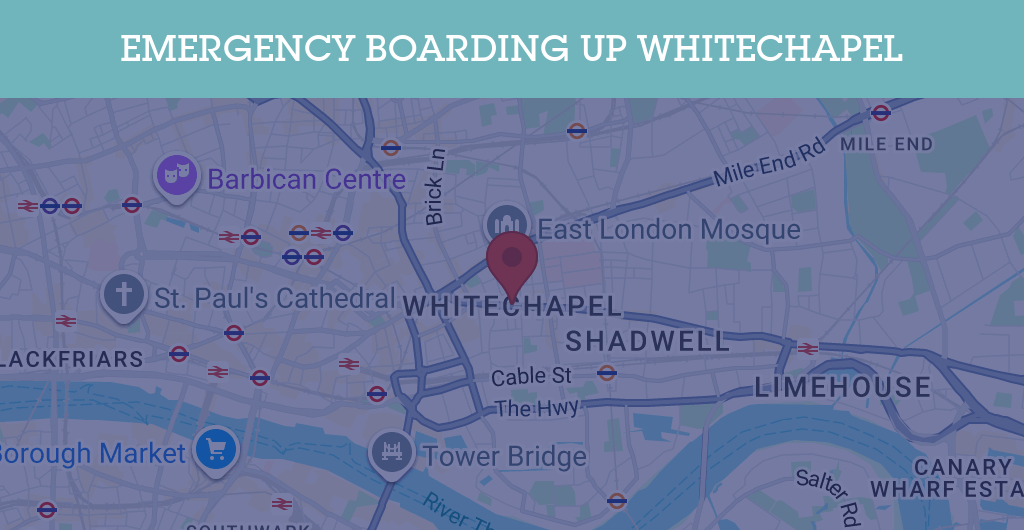
Boarding Up Whitechapel (E1) – Emergency & 24/7 Property Security
If you’ve got a smashed window, a forced door, or an exposed shopfront in Whitechapel, you don’t just need a quick fix—you need the property made safe properly, with fixings that deter repeat attempts and materials that hold up to weather and footfall. Boarding Up East London provides emergency boarding up in Whitechapel (E1) for homes, flats, shops and commercial units, with 24/7 availability and a calm, practical approach when things are stressful.
We cover Whitechapel and the wider E1 area, and we prioritise urgent call-outs (break-ins, vandalism, impact damage, fire-related openings) as they come in. We can’t honestly guarantee a set arrival time—traffic, access and the time of day all matter—but when you call, we’ll talk through what’s happened and give you a realistic ETA based on current workload.
You’ll also get the kind of paperwork and evidence people usually need afterwards: clear notes of what was secured, an itemised invoice, and (where appropriate) time-stamped photos for your insurer or property manager. We’re fully insured, have 10+ years’ trading behind us, and our technicians are DBS-checked.
Need to board up a broken window or door in Whitechapel right now? Call 020 4634 6384.
Why boarding up matters in Whitechapel (E1)
Whitechapel is a high-footfall, high-turnover part of East London. That brings advantages—transport links, constant activity—but it also creates very specific risks when an opening is damaged and left unsecured.
Common local factors we see in E1
- Busy main roads and junctions: Accidental impacts happen—delivery vans clipping shopfront glass, cyclists and pedestrians involved in incidents, or debris kicked up in bad weather. Even a “small” cracked pane can fail overnight and become a full opening.
- A strong night-time economy: Around Whitechapel Road and towards the City fringe, late-night movement increases the chance of opportunistic vandalism and repeat targeting if a property looks vulnerable.
- Mixed property stock: Whitechapel has everything from older conversions and dense blocks of flats to ground-floor commercial units with large glazed frontages. That variety affects how we secure openings—what works for a timber sash window isn’t right for a modern aluminium shopfront frame.
- High visibility: In busy areas near Whitechapel Station, a boarded opening needs to be both secure and safely installed—no protruding screws, no loose edges, and no gaps that invite tampering.
The types of damage that can’t wait in Whitechapel
People usually call us when they need to:
- board up a broken window after a break-in, impact, or ongoing cracking
- secure a smashed window on a flat or stairwell
- board up a door that’s been forced or no longer closes properly
- get a shopfront boarded up after vandalism or a failed break-in attempt
- make safe after fire service entry or emergency access
- arrange temporary boarding for an empty unit while glazing/repairs are scheduled
- secure a property out of hours when a normal contractor can’t attend
In Whitechapel, speed matters—but so does doing it in a way that actually holds. A poorly fitted board can be removed from outside, can damage the remaining frame further, or can become a safety hazard to the public. Our job is to secure the opening properly and explain what we’re doing as we go.
Materials and fixings (what we typically use and why)
We choose materials based on the risk, the opening size, and whether it’s a public-facing frontage.
- 18mm exterior-grade plywood is a common choice for ground-floor windows, doors and shopfront sections because it’s strong and performs well in wet conditions.
- 12mm OSB can be suitable for smaller, lower-risk openings or internal communal windows where the goal is to prevent access rather than deter persistent attack.
- Anti-tamper fixings are important in Whitechapel’s busier streets: they help prevent removal from the outside—especially when a property will be unattended overnight.
- For doors that can’t be secured with boarding alone, we may discuss temporary steel door options for medium-term security (particularly for empty units or repeated targeting). If the frame is too damaged for a non-destructive approach, we’ll explain your options before proceeding.
A typical Whitechapel call-out (example scenario)
A typical call-out in Whitechapel (E1) might involve a ground-floor flat or small business unit with a smashed window late evening, with the customer worried about repeat attempts overnight.
When we arrive, we’d normally:
- Check safety and access first: If glass is still falling or there are sharp edges at head height, the first step is making the area safe. In busy places, we’ll also consider the risk to passers-by and whether the immediate frontage needs a temporary barrier while we work.
- Assess the frame condition: In E1 we often see frames that are already stressed—older timber, previous repairs, or misalignment from impact. If the frame is too weak to take fixings safely, we’ll talk you through alternatives.
- Measure and cut boards accurately: For a street-facing opening, we’ll typically cut 18mm exterior ply to fit with minimal gaps, then fix it using methods designed to resist being pulled off from outside.
- Install with anti-tamper approach: We aim for secure fixing points and a finish that doesn’t invite easy removal. Where needed, we can add internal bracing to improve strength without over-stressing the frame.
- Document the work: We can provide time-stamped photos, a short work description, and an itemised invoice—useful if you’re reporting to your insurer, managing agent, or freeholder.
If you’re arranging follow-on repairs (glazier, locksmith, or a contractor), we’ll also tell you what we’ve done so the next trade can remove the boarding safely and efficiently.
What to do in an emergency in Whitechapel (E1)
When something’s been damaged, it’s easy to jump straight into “fix it now” mode. These steps help keep people safe and protect your claim later.
-
If there’s a crime in progress or immediate danger, call 999.
Don’t confront anyone. In busy areas around Whitechapel Road and near transport hubs, incidents can escalate quickly. -
If it’s safe, take quick photos before anything is moved.
Get the overall scene and close-ups of the damage (glass, frame, lock area). Don’t risk injury to get the perfect angle—insurers mainly want clear evidence. -
Keep key details together.
- Police incident or crime reference number (if applicable)
- Your insurer’s policy number
- Landlord/freeholder or managing agent contact (for flats)
- Any CCTV info (yours or a nearby business)
-
Reduce risk while you wait (without putting yourself in danger).
- Keep people away from broken glass
- Move valuables out of sight
- If it’s a shopfront, consider turning off internal lighting if it draws attention to stock
- Avoid “temporary” tape-only fixes on external openings—these can fail quickly in wind/rain and can make the opening more attractive to opportunists
-
Call us to secure the opening and make safe.
We’ll ask a few practical questions (type of opening, floor level, whether the frame is damaged, and if there are any access issues like shutters or communal entry). Then we’ll give a realistic ETA.
For urgent help, call 020 4634 6384. If you’re not on site, we can often coordinate access with a neighbour, managing agent, or keyholder.
Our local coverage around Whitechapel
This page covers Whitechapel in E1. We work across East London and prioritise urgent jobs in and around E1 due to the density of mixed-use buildings and the higher risk of repeat targeting when an opening is left exposed.
Nearby areas we also cover include:
If you’re on the border of Whitechapel and unsure whether you fall under E1 coverage, call and we’ll confirm on the phone.
Whitechapel boarding up FAQs (E1)
How fast can you attend Whitechapel (E1) out of hours?
We’re available 24/7 and we prioritise urgent call-outs. Attendance depends on current workload, time of day, and access, so we don’t promise fixed arrival times. When you call, we’ll give a realistic ETA based on where our team is and what’s already booked in.
Can you board up a shopfront on Whitechapel Road safely without causing extra damage?
Yes—shopfront boarding needs careful fixing, especially on glazed frontages with aluminium framing. We’ll assess what’s left of the frame and choose a method that secures the opening without putting unnecessary stress on already-damaged sections. If the frame is too compromised, we’ll explain the options before we proceed.
I’m in a block of flats near Whitechapel Station—do you need permission from the freeholder?
If the damage affects communal areas or external elevation, it’s often best to notify the managing agent/freeholder. In a true emergency (exposed opening, security risk, weather ingress), making safe usually comes first—but we’ll work with you on documentation so you can report the works properly afterwards.
Will boarding up stop repeat attempts overnight?
It significantly reduces the risk—especially when installed with correct board thickness and anti-tamper fixings. In a busy area like Whitechapel, repeat targeting can happen if an opening looks easy. Properly fitted boarding is designed to deter quick entry and buy time until permanent repairs are completed.
What if the door frame is split and boarding won’t hold?
If the frame can’t take fixings safely, we’ll tell you straight away. Depending on the situation, we may recommend an alternative security method (such as a temporary steel door) or a different fixing strategy that doesn’t rely on weak timber. We won’t carry out a “quick” board-up that we know won’t last.
Can you provide photos and paperwork for insurance for an E1 claim?
Yes. We can supply time-stamped photos and an itemised invoice describing what was secured and the materials used. We’re not loss adjusters, but we provide the documentation insurers typically ask for when you need to show the property was secured promptly.
My window is cracked but not fully broken—should I still board it?
In Whitechapel, cracked glazing on a ground-floor or accessible window can fail quickly (temperature change, vibration, or further impact) and may be targeted. If there’s a realistic chance it will give way before a glazier can attend, temporary boarding is often the safer option.
Call now to secure your property in Whitechapel (E1)
If you need emergency boarding up in Whitechapel—whether it’s a smashed window, a forced door, or a shopfront that needs to be made safe—call us and we’ll talk you through the next steps.
Need help now? Call 020 4634 6384.
Prefer email or need a callback arranged? Contact [email protected] and include the area (Whitechapel, E1) and what’s been damaged.
